
Leominster City Directory Collections
The strongest starting shelf is the Leominster Library Local History and Genealogy collection. It reports Leominster directories from 1900 through 1990, along with Fitchburg directories from 1876 through 1990, suburban volumes from the 1970s and 1980s, and most telephone directories from 1981 forward. That mix matters because a surname can disappear from one series while still appearing in a telephone book, street list, newspaper, or yearbook. Catalog coverage is a guide to what may be consulted, not a promise that every year survives or is available online.
| Collection | Years | Where held | Access |
|---|---|---|---|
| Leominster city directories | 1900–1990 | Leominster Library | Local-history collection; check the exact volume. |
| Price & Lee Leominster directory | 1915 | Internet Archive, contributed by Leominster Public Library | Digitized scan with 368 images and 366 pages. |
| State Library directory holdings | 1877–1944 and selected 1979 listings | Massachusetts State Library | Catalog lines overlap and some are marked microfilm. |
| Telephone directories | Most 1981–present | Leominster Library | Later-period name and address bridge. |
| Street lists and city reports | Street lists 1958–present; reports 1866/67–present | Leominster Library | Use the year as a fixed date marker. |
A view of the library's local-history resource shows the public entry point for these Leominster city directory materials and related genealogy help.

Use the library first for a volume, a microfilm question, or a gap between printed directory years. The reference desk also routes researchers to offsite maps and local files.
Note: An old directory places a person in a stated year, but it does not establish present residence or identity by itself.
Leominster City Directory Years at the Library
Leominster’s historical shelf is wider than the bound city directories. The Local History Room keeps family and person folders plus Citizens and General Topics clipping cabinets. The library cautions that the clippings are not exhaustive, have no fixed date span, and are strongest in the later twentieth century. Its staff can perform limited obituary and brief newspaper research in person, by phone, mail, or email. An obituary request needs a name, death month and year at minimum, and the last city or town of residence. The library says it replies within 48 hours with either an estimate or a result status.
For early and mid-period work, ask about pre-1900 Leominster directories, vital microforms to about 1900, proprietor records from 1701 to 1847, town records from 1740 to 1900, and First Church records from 1743 to 1960. Annual reports add another dated layer: poll-tax reports run from 1915 to 1931, valuation reports from 1876 to 1923, and street lists from 1958 onward. These are not interchangeable sources. Each captures a different relationship to place and time.
The library is at 30 West Street and its online resources page identifies library-internet access to American Ancestors, Ancestry Library Edition, FamilySearch Affiliate Library images, Fold3, digitized Digital Commonwealth material, and LHS Magnet yearbooks. Magnet covers 1907 to 2025 with stated gaps in 1917 and 1919 through 1923. Verify library hours before an in-person research visit.
The 1915 Leominster City Directory
The digitized 1915 Price & Lee volume is a useful model for reading a historical Leominster city directory. Its title page describes a general directory of citizens, street guide, classified business directory, map, town officers, churches, and societies. The contents place abbreviations and resident names at page 49, the Street Guide at page 235, the business directory at page 299, town officers at page 339, and churches at page 343. The scan therefore gives more than a name list. It shows the local civic structure that surrounded an entry.
The digitized 1915 Leominster directory is the appropriate source for the following scan view.
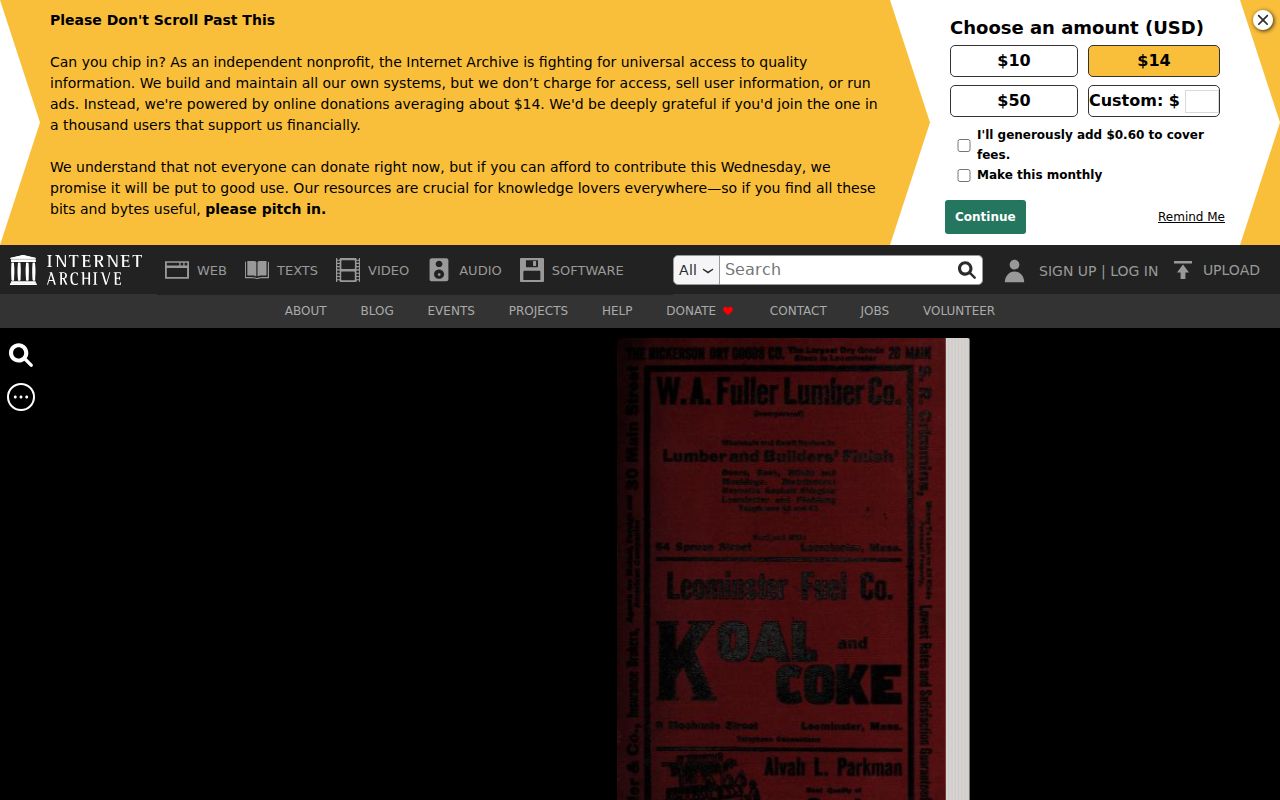
Read the abbreviation page before copying an entry. The same 1915 volume uses compact marks that change the meaning of the address, room, or family notation.
Its compilation recorded roughly 8,747 names in the main list, plus additions, removals, and address changes. A missing name in one year can reflect movement, delayed listing, a changed spelling, or a changed compilation practice. Compare nearby volumes before drawing a conclusion.
Reading a Leominster City Directory Entry
Entries need to be transcribed with their original shorthand. “Abbott Henry J elect h 85 Boutelle,” for example, records a name, a trade abbreviation, the mark h, and an address. In this context, h means house or lives at. It is a residence clue for that directory year. “Joseph Q bkkpr h 683 Main N L” includes N L, meaning North Leominster. “Adams Charles A” has separate business and home addresses, a reminder that an address attached to a name may describe a business location rather than a residence.
| Name and initials | Preserve the exact spelling and initials, then compare variants in other years. |
|---|---|
| Street or room note | h signals a house or residence clue; rms means rooms. |
| Local direction | N L identifies North Leominster and should remain in notes. |
| Family notation | wid identifies a widow marker and needs careful historical handling. |
| Repeated address | do means the same as above, so read the prior line before treating it as a new location. |
- Street Guide
- The alphabetical street section that gives a street course and cross streets, useful for locating an older address in its period.
- Abbreviation key
- The volume’s own guide to compact marks such as h, rms, and trade abbreviations. Read it before expanding a term.
- Criss-cross directory
- A later directory arrangement that organizes entries by street or address rather than simply by name. No complete Leominster shelf catalog was verified, so ask the library about a specific year.
Note: A business address and a residence address can appear in the same entry, so retain the labels instead of combining them.
Leominster City Directory Street Guide
The Street Guide makes the city directory useful for address history without turning it into a modern address tool. In the 1915 volume, streets are alphabetical and their courses are described by compass direction and cross streets. Abbott Avenue, for example, runs from Blossom north and east to Nichols. The guide also distinguishes North Leominster. Read its route with the resident entry, rather than assuming an old direction or local abbreviation matches a current mailing format.
For the physical setting behind an entry, the library holds late-nineteenth- and early-twentieth-century atlases. Fragile atlases cannot be photocopied. Sanborn fire-insurance maps are offsite on microfilm, with Leominster on Reel 22, and can be requested at the second-floor Reference Desk. Older city mapping and printed streets provide context, not an automatic conversion to a current parcel number. Modern address-keyed sources are better handled through the Leominster by-street directory.
The 2005 move from old assessor maps to digital GIS also creates a practical divide. A historical street guide, a PDF map sheet, a plan, and a modern map card may use different keys. Record the source year beside every street spelling and house number.
Leominster City Directory Clues in Newspapers
Newspapers and yearbooks can settle questions that an abbreviated directory line leaves open. The library reports weekly Leominster Enterprise microfilm from 1873 to 1903 and daily coverage from 1895 to 1973. After the September 3, 1973 merger with the Fitchburg Sentinel, the combined run continues in the local archive. The Pioneer is complete on microfilm for 1985 to 1989. A notice, obituary, civic listing, or address reference may confirm a date, while still needing comparison with an official event record where one is required.
The Advantage Archives advanced search supports full text, a people/places/events selector, city and title filters, and date limits. Search a surname, street, business, and event separately. OCR can miss a name, and a directory abbreviation may not match later spelling. Online listed runs include the Daily Enterprise from 1895 to 1963, Leominster Enterprise from 1963 to 1973, and related titles through 1988.
Yearbooks offer a school-year clue, not a complete community roll. Church histories, annual reports, and military compilations in the local collection provide the same sort of dated companion evidence. Keep the publication date visible in each note.
Trace Families with Leominster City Directories
A careful family-history trail moves from one dated record to the next. Start with the surname, street, business name, or year supplied by an obituary, letter, photograph, or family record. Move only after recording what the first volume actually says. A change in address, a new listing, or a “rem” notation is evidence of movement, not a statement of why someone moved or whether a person died.
- Locate the nearest available Leominster directory at the library, in the digitized 1915 volume, the State Library holdings, or the FamilySearch catalog.
- Copy the name, initials, residence clue, business clue, room or boarding note, and the original abbreviations.
- Read the same volume’s Street Guide and retain old directions, parenthetical numbers, and North Leominster notation until they are confirmed.
- Compare adjacent years where they exist. Pair a move or new listing with a newspaper result, obituary lead, deed or plan, or vital record according to the question.
- For later years, use telephone directories, street lists, assessor/GIS, deeds, and local newspapers. For earlier periods, use town, proprietor, church, atlas, and State Archives materials.
When a directory discovery needs a modern identity check, use the Leominster resident lookup workflow rather than reading an old entry as a present fact. The historical value lies in the sequence: several well-dated records usually say more than one isolated line.
Leominster City Directory Era Context
Leominster became a city in 1915, which makes the Price & Lee volume a transition-year record. It combines residents, streets, businesses, town officers, churches, societies, and census material in one printed system. The city’s shift from town books and directories to fiscal GIS and state portals did not replace every earlier record. It changed where a researcher must look and how each item is indexed.
One local companion is the 1915 City Hall time capsule. The library reports that it was removed July 11, 2015, placed in library custody, and inventoried by Jeannine Levesque; digitized material is available through Digital Commonwealth. The Leominster Historical Society, based at the historic Field School, also preserves local images, artifacts, maps, documents, and a library. It does not operate as a current resident roster.
A look at the Leominster Historical Society shows the local-history organization that can help place a directory find among maps, institutional records, and photographs.
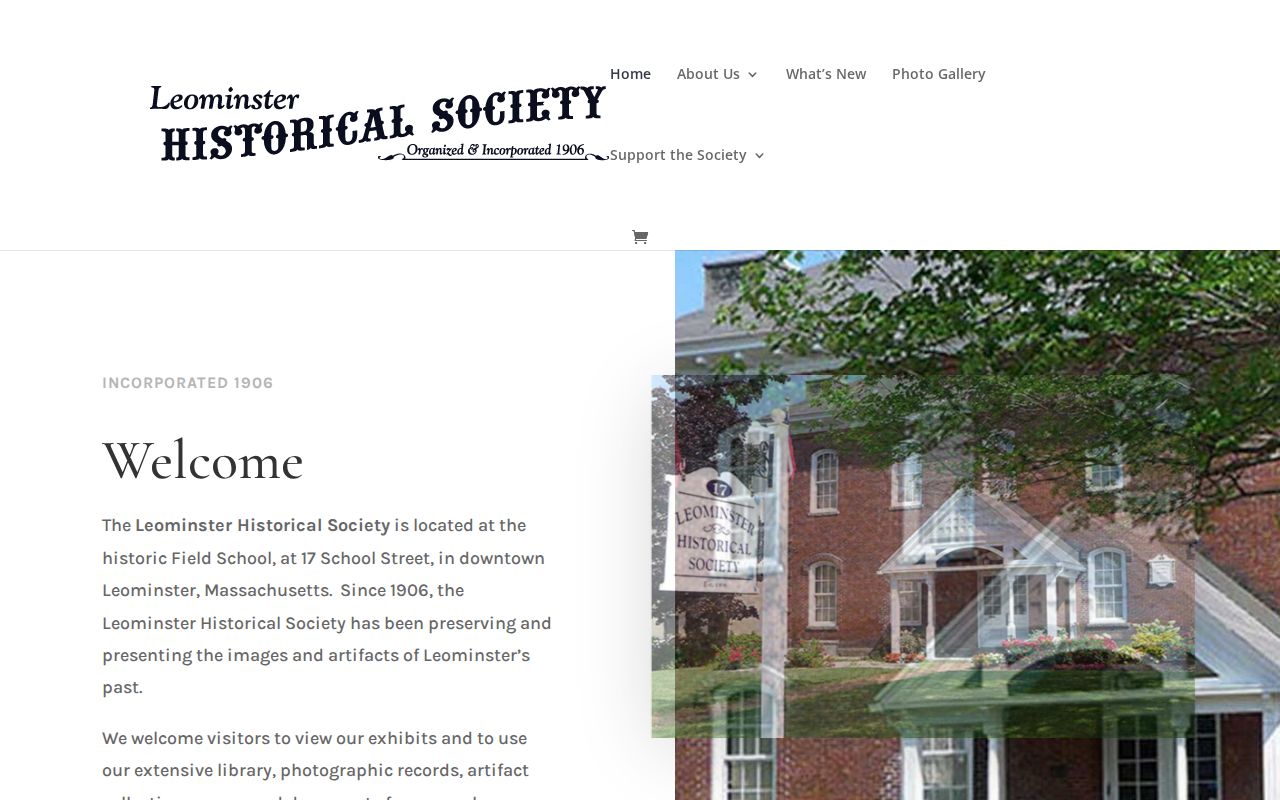
Use its historical materials to add context to a dated directory entry. Confirm any address or identity conclusion against the original collection or its custodian.